This Community Area Plan (CAP) is one tool to support implementation of the citywide Charlotte Future 2040 Comprehensive Plan and the Charlotte Future 2040 Policy Map, providing more detailed guidance for land use, building form, mobility, open space, and public facilities for the Northeast Inner community-level geography. At this scale, the Northeast Inner CAP provides a coordinated, efficient, and effective structure for identifying nuanced and locally-specific needs and priorities. It also provides a structure for developing strategies and recommendations to address those needs and priorities and for contributing to the community’s overarching goal to create a more equitable Charlotte.
This E-Plan serves as a summary of the complete, adopted Northeast Inner Community Area Plan, which can be viewed by following the link below.
On November 24, 2025, Charlotte City Council adopted the Northeast Inner Community Area Plan and the Revised Policy Map for this area.

Northeast Inner Location Map – Click to enlarge
Community Area Profile
The Northeast Inner geography is roughly bounded by LYNX Blue Line to the north, Eastway Drive to the east, Central Avenue to the south, and the Norfolk Southern Railway to the west The geography is served by several major avenues that include high-capacity transit service. The geography is well served by the LYNX Blue Line, including four transit stops from Parkwood to Sugar Creek Transit Station. The area is predominantly grid street network that increases connectivity and is considered more walkable given the setbacks, scale, and mix of uses within the buildings. Currently, the area is predominantly characterized by the Neighborhood 1 Place Type with additional concentrations of Neighborhood 2 and Manufacturing & Logistics Place Types. The Northeast Inner geography is currently home to 21,830 residents (2% of the City’s population) with similar education rates and slightly lower racial and ethnic diversity than the citywide averages. By 2040, this area is expected to grow by 1,455 residential units and 2,807 new jobs (1% each of the city’s total growth).
Understanding these current conditions and expected growth patterns help in determining the specific needs and priorities for the Northeast Inner area. Specifically, this profile sets the foundation for understanding how local growth and change can contribute to a more equitable city for all by increasing opportunity and access and by reducing harmful impacts. More information about existing conditions can be found in the Northeast Inner Community Report.
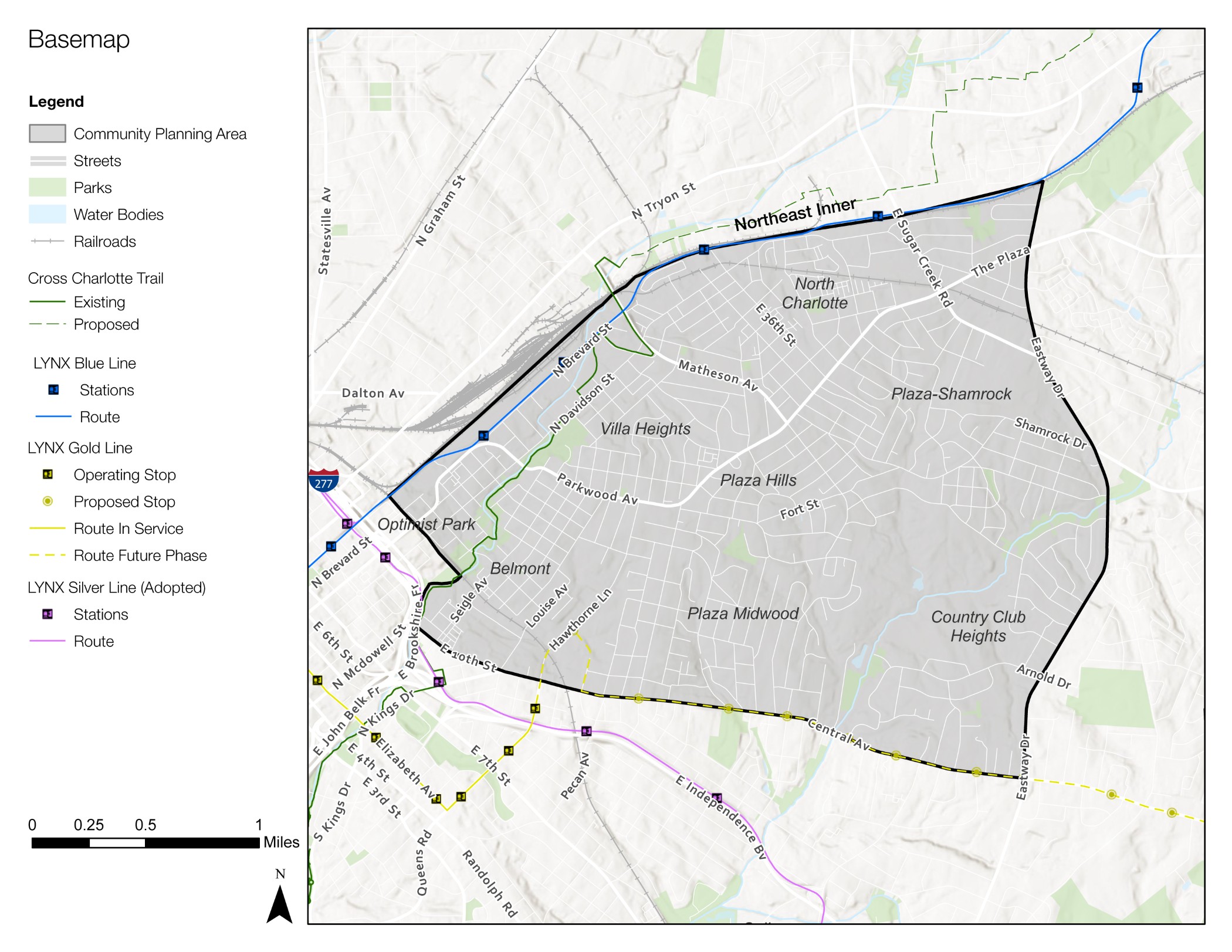
Northeast Inner Area Map – Click to enlarge
Expected Growth
The Northeast Inner geography is projected to see an increase of 1,455 residential units, which is 1% of the city’s overall residential growth, and 2,807 new jobs, which is 1% of the city’s total job growth, by the year 2040.

Data Sources: American Community Survey (ACS) 2019, Quality of Life Explorer (QOL) 2020, Community Viz Model 2020, CPA Prioritization Matrix 2019