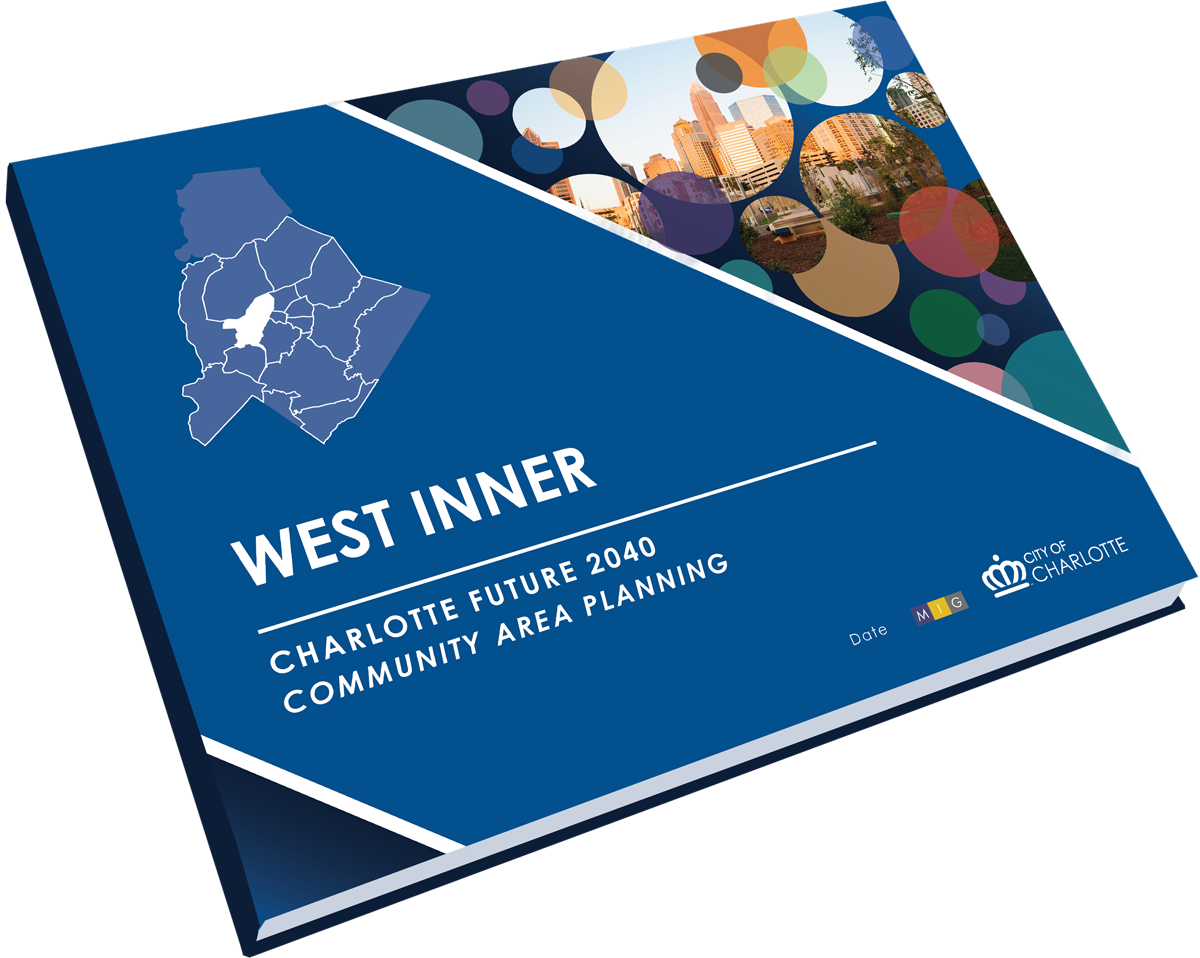
The Community Area Plans (CAPs) build upon the vision and goals of the Comprehensive Plan and provide more detailed guidance for equitable growth and redevelopment. The guidance and policies in the CAPs support the community’s vision for increased access to daily goods and services, housing choices, and job opportunities and reduced environmental impacts.
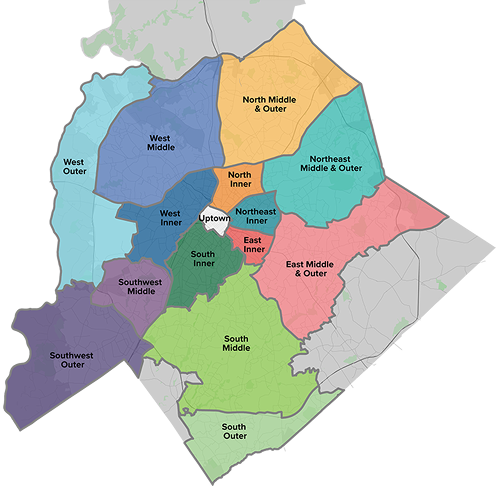
There are 14 CAP geographies, each of which was used to facilitate focused conversations among neighborhoods and to address major barriers and challenges. The plan boundaries were created using several factors, including expected population growth, development patterns, and natural boundaries. All 14 CAPs, which are color-coded by geography, were developed concurrently to ensure that no area was left waiting for this important guidance and are intended to be updated approximately every 10 years.
The CAP development process included five key phases, including robust community engagement at every stage with the aim of being equitable and inclusive to ensure that all residents had an opportunity to share their voice.
Community needs were identified based on priorities for increased access and reduced impacts. The Comprehensive Plan goals were then prioritized for each area based on these needs. This work is summarized in the ‘Community Profile’ and ‘Community Needs & Goal’ chapters of each CAP.
Ensured future development supports each community’s needs and goals by reviewing and refining the Place Type designations within the Charlotte Future 2040 Policy Map. Drafts of the Revised Policy Map were released multiple times throughout the planning process and the outcomes are included in the ‘Creating Complete Communities’ chapter of each CAP
Planned projects and existing programs were identified, along with new initiatives needed to support future growth. Engagement included participation from 22 City and County agencies, and the outcomes are detailed in the ‘Supporting the Vision’ chapter of each CAP.
Developed implementation strategies for putting the plans’ recommendations into action. Each plan’s ‘Implementation’ chapter outlines specific steps that can be taken by public and private entities to help realize the community’s vision.
Adoption of Community Area Plans by City Council. Once adopted, these plans will provide guidance for decision making related to land development and capital investments.
The 14 CAPs are organized into five sections:
Community Profile
The Community Profile section includes a map, description of existing conditions, summary of demographics and expected residential and job growth for each plan geography.
Community Needs and Goals
The Community Needs & Goals section provides an overview of each geography’s needs based on the Equitable Growth Framework. This section also identifies the Comprehensive Plan Goals that are highest priority for the geography based on those metrics.
Creating Complete Communities
The “Creating Complete Communities” section focuses on recommended development patterns for the CAP geography and the most predominant types of recommended change.
Supporting the Vision
The “Supporting the Vision” section includes five distinct topical sections, with spatial analysis, identified needs, and recommendations for mobility, open space, environmental justice and sustainability, community character, and public facilities and services.
Implementation
The “Implementation” section includes two distinct components: the implementation guide, which provides more specific guidance for taking action on the plan’s recommendations, and illustrative concepts, which provide visualization for two example locations where development change may take shape over time.
While each plan follows this same structure and all have similar content, the specific needs, priority goals, and some policy recommendations are tailored to each unique context.